Onedrive Qt Platform Plugin Windows
Hi all, this is my first time posting here but i've used some of the solutions here for other problems and it worked. So i'm hoping someone might have a solution to this problem.
- Qt Platform Plugin Windows Vista
- Download Qt Platform Plugin Windows
- Qt Platform Plugin Windows Error
- Onedrive Could Not Find Or Load The Qt Platform Plugin Windows
- Qt Platform Plugin Windows Download
Re: This application failed to start because it could not find or load the Qt platform plugin 'windows' Kevin-Monahan May 15, 2017 12:50 PM ( in response to Joe Bodego ).
I had the same issue 'Application failed to start because it could not find or load the QT platform plugin 'windows' I fixed this by copying below files to the app.exe (my app executable) folder, Qt5Core.dll, Qt5Gui.dll, Qt5Widgets.dll and a 'platforms' directory with qminimal.dll, qoffscreen.dll, qwindows.dll. I hope this will help someone. Nov 17, 2015 This application failed to start because it could not find or load the Qt platform plugin 'windows'. Closed NejiHyuga900 opened this issue Nov 17, 2015 16 comments Closed This application failed to start because it could not find or load the Qt platform plugin 'windows'. Failed to load platform plugin 'windows'. Available platforms are: none. No platforms were listed. I think there is one more abstraction layer introduced in Qt4.8 and mandatory for Qt5.0 but I do not find a way or hint how to build this plugins. Thanx, Harald. This application failed to start because it could not find or load the Qt platform plugin 'windows'. Available platform plugins are: minimal, offscreen, windows. Folder structure looks like this: release + gui.exe + icudt51.dll + icuin51.dll + icuuc51.dll + libGLESv2.dll + Qt5Core.dll + Qt5Gui.dll + Qt5Widgets.dll + platforms.
So yesterday my sister used my laptop and i did a routine scan after someone uses my computer. i found a trojan horse skeeyah and removed it via windows defender (or so it says).
After restarting i immediately got the message 'OneDrive cannot load due to missing Qt platform 'windows' plugin. Reinstalling the program might fix it.'
And aside from that, some of my desktop icons went missing but when i put them back, windows asks me if i wanted to rename them because they already exist.
When i check desktop folder in windows explorer, it is empty along with my other folders downloads, documents etc. Yet the undeleted icons still work. So suspect the files are still there but it is hidden somehow.
What is a Qt platform? Are these problems caused by the trojan virus? I am at an impasse now. Please help!
Laptop model and make:
Toshiba satellite l850
Windows 10 pro
Intel core i5 2.6ghz
Radeon hd 6700 series
Edit:Some people started to mark my question as a duplicate. Do not forget that many similar questions existed when I asked this one (see e.g. the list below). However, none of these answers solved my problem. After a long search I found a comment which had been ignored by all users pointing to the missing lib. Now, many months later, the comment has been changed to an answer. However, when I answered this question by msyself I intended to help other people by directly providing the solution. This should not be forgotten and so far my answer helped a lot of people. Therefore my question is definitely not a duplicate. By the way: The accepted answer within the provided link on top does not solve the problem!
Yes, i used the search:
However, in my case the problem still persists. I am using Qt 5.1.1 with Visual Studio 2012 and developed my Application on Windows 7 with Qt Creator 2.8.1. Application is compiled in 'Release'-mode and can be executed if directly started with Qt Creator.
However, when starting from the 'release'-Folder, i get the following message:
NSA 220 Firmware; NSA 220W Firmware; NSA 240 Firmware; NSA 2400 Firmware; NSA 2400MX Firmware; NSA 250M Firmware; NSA 250MW Firmware; NSA 2600 Firmware; NSa 2650 Firmware; NSA 3500 Firmware; NSA 3600 Firmware; NSa 3650 Firmware; NSA 4500 Firmware; NSA 4600 Firmware; NSa 4650 Firmware; NSA 5000 Firmware; NSA 5600 Firmware; NSa 5650 Firmware; NSA. Identify the current life cycle phase of your product and understand eligibility for support and and new release downloads. About SonicWall. Press Releases. SonicWall Not Affected by Critical Remote Code Execution. Software and firmware. Learn More Report An Issue. Report a potential security vulnerability. 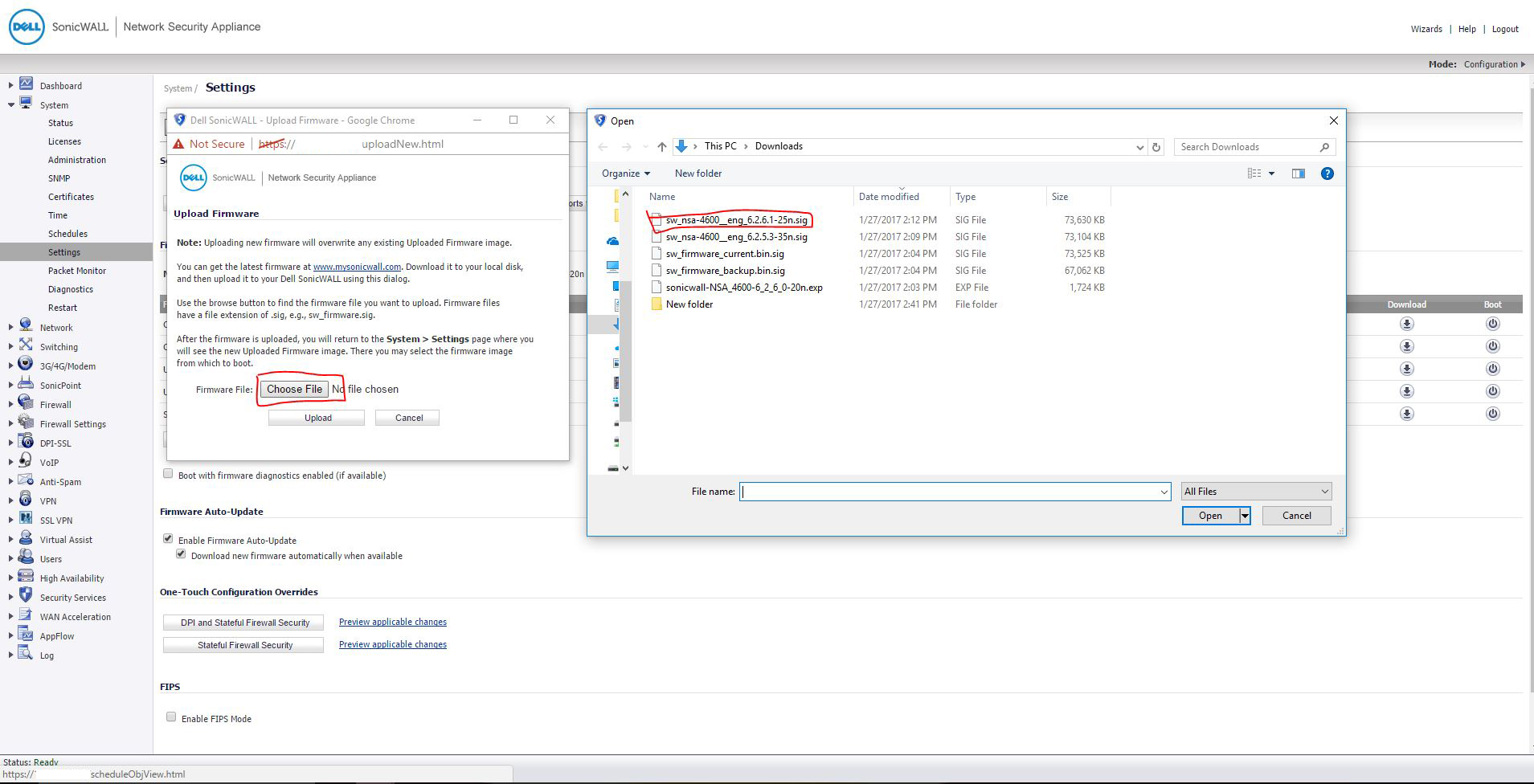 Under the Support column click the Firmware icon: Click on the Download link next to the latest version (.sig file) Save the new SonicOS firmware to a directory on your management computer. To apply the downloaded firmware to your SonicWall firewall please see How to Upgrade SonicOS Firmware.
This application failed to start because it could not find or load the Qt platform plugin 'windows'. Available platform plugins are: minimal, offscreen, windows.
Folder structure looks like this:
Platforms is the folder directly copied from QtQt5.1.15.1.1msvc2012pluginsplatforms including e.g. qwindows.dll. Does not matter if I rename it to 'platform' as some other users did. Qt is still not finding the 'platform plugin windows', where is my mistake?
16 Answers
Okay, as posted here https://stackoverflow.com/a/17271172/1458552 without much attention by other users:
The libEGL.dll was missing! Even though this has not been reported when trying to start the application (all other *.dlls such as Qt5Gui.dll had been reported).
I created a platforms directory next to my exe location and put qwindows.dll inside, but I still received the 'Failed to load platform plugin 'windows'. Available platforms are: windows' error.
I had copied qwindows.dll from C:QtQt5.1.1ToolsQtCreatorbinpluginsplatforms, which is not the right location. I looked at the debug log from running in Qt Creator and found that my app was looking in C:QtQt5.1.15.1.1mingw48_32pluginsplatforms when it ran in the debugger.
When I copied from C:QtQt5.1.15.1.1mingw48_32pluginsplatforms, everything worked fine.
The release is likely missing a library/plugin or the library is in the wrong directory and or from the wrong directory.
Create a folder named 'platforms' in the same directory as your application.exe file. Copy and paste the qwindows.dll, found in the /bin of whichever compiler you used to release your application, into the 'platforms' folder. Like magic it works. If the .dll is not there check plugins/platforms/ ( with plugins/ being in the same directory as bin/ ) : PfunnyGuy's comment.
It seems like a common issue is that the .dll was taken from the wrong compiler bin. Be sure to copy your the qwindows.dll from the same compiler as the one used to release your app.
Also another helpful tip, Qt comes with platform console applications that will add all dependencies (including ones like qwindows.dll and libEGL.dll) into the folder of your deployed executable. The application for windows is called windeployqt and the documentation can be found here http://doc.qt.io/qt-5/windows-deployment.html.
Setting the QT_QPA_PLATFORM_PLUGIN_PATH environment variable to %QTDIR%pluginsplatforms worked for me.
It was also mentioned here and here.
I tried using GIMP, but after using Photoshop, I had a hard time 're-learning' the tools and methods I've become familiar with in Photoshop. PleasedPhotoshop is a great program and the industry standard for many applications. Adobe photoshop price in india. I'll probably be using Win 7 and Photoshop 7 for the next 10 years.
I ran into this and none of the answers I could find fixed it for me.
My colleauge has Qt (5.6.0) installed on his machine at:C:QtQt5.6.05.6msvc2015plugins
I have Qt (5.6.2) installed in the same location.
I learned from this post: http://www.tripleboot.org/?p=536, that the Qt5Core.dll has a location to the plugins written to it when Qt is first installed.Since my colleague's and my Qt directories were the same, but different version of Qt were installed, a different qwindows.dll file is needed. When I ran an exe deployed by him, it would use my C:QtQt5.6.05.6msvc2015pluginsplatformsqwindows.dll file instead of the one located next to the executable in the .platforms subfolder.
To get around this, I added the following line of code to the application which seems to force it to look next to the exe for the 'platforms' subfolder before it looks at the path in the Qt5Core.dll.
I added the above line to the main method before the QApplication call like this:
create dir platforms and copy qwindows.dll to it, platforms and app.exe are in the same dir
cd app_dirmkdir platformsxcopy qwindows.dll platformsqwindows.dll
Folder structure+ app.exe+ platformsqwindows.dll
I found another solution. Create qt.conf in the app folder as such:
And then copy the plugins folder into the app folder and it works for me.
Peter QuiringPeter QuiringMost of these answers contain good (correct) info, but in my case, there was still something missing.
My app is built as a library (dll) and called by a non-Qt application. I used windeployqt.exe to set up the Qt dlls, platforms, plugins, etc. in the install directory, but it still couldn't find the platform. After some experimentation, I realized the application's working directory was set to a different folder. So, I grabbed the directory in which the dll 'lived' using GetModuleHandleExA and added that directory to the Qt library path at runtime using
This worked for me.
I had this problem while using QT 5.6, Anaconda 4.3.23, python 3.5.2 and pyinstaller 3.3.I had created a python program with an interface developed using QTcreator, but had to deploy it to other computers, therefore I needed to make an executable, using pyinstaller.
I've found that the problem was solved on my computer if I set the following environment variables:
QT_QPA_PLATFORM_PLUGIN_PATH: %QTDIR%pluginsplatforms
QTDIR: C:Miniconda3pkgsqt-5.6.2-vc14_3Library
But this solution only worked on my PC that had conda and qt installed in those folders.
To solve this and make the executable work on any computer, I've had to edit the '.spec' (file first generated by pyinstaller) to include the following line:
datas=[( 'C:Miniconda3pkgsqt-5.6.2-vc14_3Librarypluginsplatforms*.dll', 'platforms' ),]
This solution is based on the answers of Jim G. and CrippledTable
I had the same problem and solved it by applying several things.The first, if it is a program that you did with Qt.
In the folder (in my case) of 'C: Qt Qt5.10.0 5.10.0 msvc2017_64 plugins' you find other folders, one of them is 'platforms'. That 'platforms' folder is going to be copied next to your .exe executable. Now, if you get the error 0xc000007d is that you did not copy the version that was, since it can be 32bits or 64.
If you continue with the errors is that you lack more libraries. With the 'Dependency Walker' program you can detect some of the missing folders. Surely it will indicate to you that you need an NVIDIA .dll, and it tells you the location.
Another way, instead of using 'Dependency Walker' is to copy all the .dll from your 'C: Windows System32' folder next to your executable file. Execute your .exe and if everything loads well, so you do not have space occupied in dll libraries that you do not need or use, use the .exe program with all your options and without closing the .exe you do is erase all the .dll that you just copied next to the .exe, so if those .dll are being used by your program, the system will not let you erase, only removing those that are not necessary.
I hope this solution serves you.
Remember that if your operating system is 64 bits, the libraries will be in the System32 folder, and if your operating system is 32 bits, they will also be in the System32 folder. This happens so that there are no compatibility problems with programs that are 32 bits in a 64-bit computer.The SysWOW64 folder contains the 32-bit files as a backup.
EJoshuaSFor a MinGW platform and if you are compiling a Debug target by a hand made CMakeLists.txt written ad hoc you need to add the qwindows.dll to the platform dir as well.The windeployqt executable does its work well but it seems that for some strange reason the CMake build needs the release variant as well.In summary it will be better to have both the qwindows.dll and qwindowsd.dll in your platform directory.I did not notice the same strange result when importing the CMake project in QtCreator and then running the build procedure.Compiling on the command line the CMake project seems to trigger the qwindows.dll dependency either if the correct one for the Debug target is set in place (qwindowsd.dll)
Use this batch file: RunWithQt.bat
- to use it, drag your gui.exe file and drop it on the RunWithQt.bat in explorer,
- or call
RunWithQt gui.exefrom the command line
Qt Platform Plugin Windows Vista
If you have Anaconda installed I recomend you to uninstall it and try installing python package from source, i fixed this problem in this way
Download Qt Platform Plugin Windows
Qt Platform Plugin Windows Error
The application qtbase/bin/windeployqt.exe deploys automatically your application. If you start a prompt with envirenmentvariables set correctly, it deploys to the current directory.You find an example of script:
Lets say, you wanted to have some CGAL-Demos portable. So you'd have a folder 'CGAL', and in it, 1 subfolder called 'lib': all (common) support-dlls for any programs in the CGAL-folder go here. In our example, this would be the Dll-Download: simply unzip into the 'lib' directory. The further you scroll down on the demos-page, the more impressive the content. In my case, the polyhedron-demo seemed about right. If this runs on my 10+ yo notebook, I'm impressed. So I created a folder 'demo' in the 'CGAL'-directory, alongside 'lib'.Now create a .cmd-file in that folder. I named mine 'Polyhedron.cmd'. So we have a directory structure like this:
Onedrive Could Not Find Or Load The Qt Platform Plugin Windows
In this little example, 'Polyhedron.cmd' contains the following text:
All scripts can be the same apart from the last line, obviously. The only caveat is: the 'DOS-Window' stays open for as long as you use the actual program. Close the shell-window, and you kill the *.exe as well. Whereever you copy the 'CGAL'-folder, as the weird '%~dp0'-wriggle represents the full path to the *.cmd-file that we started, with trailing '. So '%me%lib' is always the full path to the actual library ('CGALlib' in my case). The next 2 lines tell Qt where its 'runtime' files are. This will be at least the file 'qwindows.dll' for Windows-Qt programs plus any number of *.dlls. If I remember rightly, the Dll-library (at least when I downloaded it) had a little 'bug' since it contains the 'platforms'-directory with qwindows.dll in it. So when you open the lib directory, you need to create a folder 'plugins' next to 'platforms', and then move into 'plugins'. If a Qt-app, any Qt-app, doesn't find 'qwindows.dll', it cannot find 'windows'. And it expects it in a directory named 'platforms' in the 'plugins' directory, which it has to get told by the OS its running on..and if the 'QT_PLUGIN_PATH' is not exactly pointing to all the helper-dlls you need, some Qt-programs will still run with no probs. And some complain about missing *.dlls you've never heard off..
Qt Platform Plugin Windows Download
For me the solution was to correct the PATH variable. It had Anaconda3Librarybin as one of the first paths. This directory contains some Qt libraries, but not all. Apparently, that is a problem. Moving C:ProgramsQt5.12.3msvc2017_64bin to the front of PATH solved the problem for me.
protected by Community♦Jan 29 at 10:18
Thank you for your interest in this question. Because it has attracted low-quality or spam answers that had to be removed, posting an answer now requires 10 reputation on this site (the association bonus does not count).
Would you like to answer one of these unanswered questions instead?